
You’re Not Too Late
TL;DR: The belief that you missed your window is one of the most common reasons senior leaders stay stuck. Twenty or more years of corporate experience is not a reason to wait — it's the asset that makes building an advisory business possible. The leaders who act are not younger or less experienced than those who don't. They just stopped treating readiness as a prerequisite.
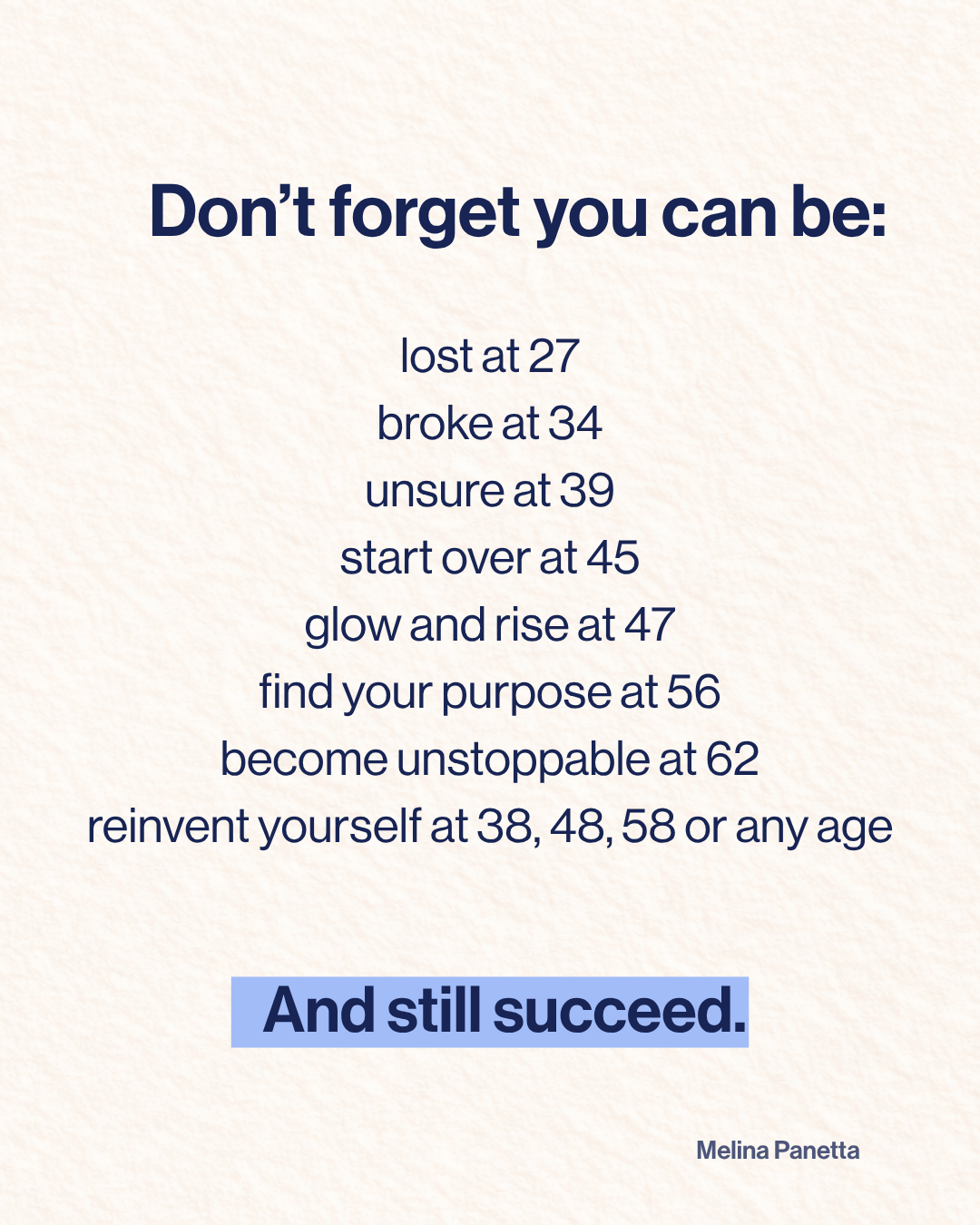
We're taught that reinventing yourself gets harder with age.
That after 40, you're behind. That starting over means starting from zero.
I don't buy that anymore.
After working with 115+ clients, 65% rebuilt everything in their 50s.
They didn't start from zero. No one does.
What a 25-year-old has vs. what you have
At 25, you're searching for your identity.
You're trying to figure out who you are, what you want, and where you fit.
You take every opportunity that comes your way because you don't yet know which doors lead where.
You have energy and time, but very little clarity.
At 47 or 52, you're not searching anymore.
You already know.
You know what drains you and what lights you up.
You know which clients are worth your time and which ones will make your life miserable.
You know what a bad deal looks like before you sign it.
That's leverage.
The three things mid-career professionals bring that 25-year-olds don’t
#1: Pattern recognition
A seasoned corporate executive can spot bad deals, toxic environments, and dead-end paths in minutes.
You've seen how restructuring tanks morale.
You've watched leadership make the same mistakes on repeat.
You've been in enough boardrooms to know when someone's bluffing.
That pattern recognition saves you years of trial and error when you build your own business.
#2: Judgment
You know what doesn't work.
You know which risks are worth taking and which ones will blow up in your face.
At 25, everything feels like a gamble.
At 50, you've already taken the gamble and lived through the outcome. Multiple times.
That judgment means you can make faster, smarter decisions with less second-guessing.
#3: Credibility
Two decades of results mean clients trust you faster and pay you more.
When you say you've led big teams or closed million-dollar deals, people believe you.
They don't need to see a portfolio or a case study deck.
Your experience is your proof.
Credibility shortens the sales cycle.
It commands premium pricing and it opens doors that a 25-year-old has to spend years knocking on.
Your 40s and 50s give you leverage
The narrative around starting over after 40 is garbage.
People act like you're washed up.
Like you missed your window.
Like the best opportunities are reserved for people who started in their 20s.
But the data tells a different story.
Most people who build their best work do it after 40.
After life forces a reset. After burnout. After playing it safe for decades.
Bernie Marcus started Home Depot at 49.
Andrea Bocelli became a global success in his late 30s.
I left corporate at 47 and built a thriving business while traveling and helping others do the same.
The first 40 years built you for what comes next.
You didn't lose time. You gained experience.
And experience is the only thing you can't fake, buy, or shortcut.
If you're wondering whether it's too late, send me a message.
I'd love to hear what's on your mind.
Melina
Frequently Asked Questions
Am I too old to start building an advisory business? No. Advisory businesses run on judgment, pattern recognition, and relationships — all of which improve with experience. The leaders who build the most premium advisory practices are typically in their 40s and 50s, when their expertise is at its peak and their network is most valuable.
Is there a best age to start building an advisory business? There is no ideal age, but there is an ideal window: while you still have corporate stability to fund the build. The earlier you start within your current role, the more leverage you have. But senior leaders at any stage can build successfully.
What if I missed the window to build while employed? You didn't. The window closes when you stop having expertise the market needs — not when you leave a role. If you have 20 or more years of corporate experience, the market for your judgment exists. The question is how to package and position it, not whether it is too late.
How long does it realistically take to start generating advisory income? Most senior leaders using a structured approach land their first advisory client within 45 to 90 days of starting. The timeline depends on how clearly you define your offer and how actively you pursue conversations with potential clients.
What is the first step if I want to start now? Identify the specific problem you have solved most consistently across your career. That is the foundation of your advisory offer. You do not need a business plan, a website, or a brand before you start having conversations with potential clients.